

Why Project Data Analytics Is the New Core Knowledge

For decades, project management was driven by process and experience. Schedules, budgets, and risks were managed in silos—and success was often judged after the fact.
But in the modern project environment—where complexity, urgency, and transparency rule—project data analytics is emerging as the new core capability for PMs. It’s not just a toolset. It’s a mindset shift.
Project managers are no longer just orchestrators; they are also leaders. They are now expected to be analysts, sensemakers, and foresight generators.
What Is Project Data Analytics?
At its core, project data analytics is the application of data science principles—like pattern recognition, visualization, and predictive modeling—to project management.
It’s about moving from:
Descriptive: “What happened?”
Diagnostic: “Why did it happen?”
Predictive: “What’s likely to happen?”
Prescriptive: “What should we do about it?”
Instead of relying on static status reports and retrospective evaluations, the modern PM is equipped to deliver real-time insights and forward-looking intelligence to help organizations steer with precision.
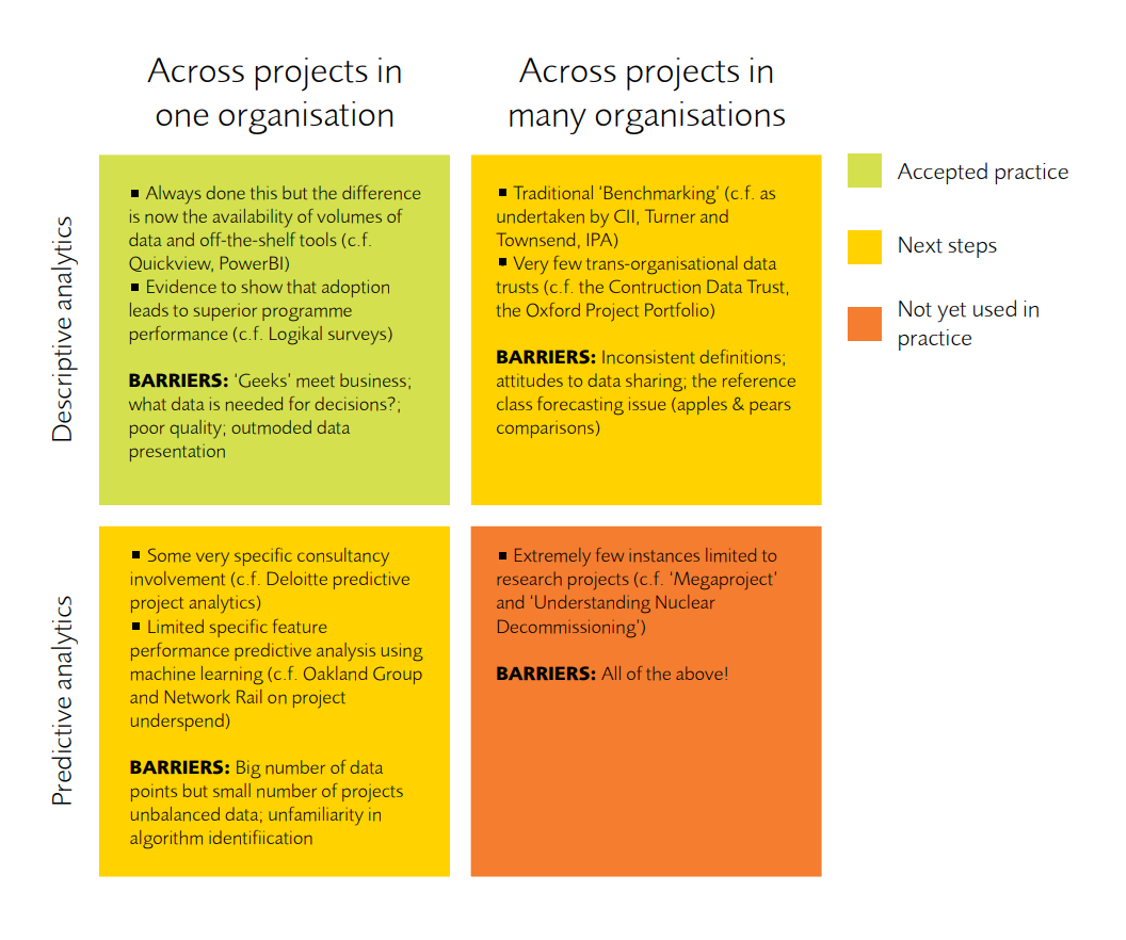
How Power BI Enables Project Data Analytics
Power BI acts as the gateway between raw project data and actionable insight. When connected to project schedules, financial systems, risk registers, and strategic OKRs, it helps PMs:
Spot risks early by analyzing historical delays, burn rate anomalies, and delivery trends
Track performance across multiple projects in a unified, visual format
Analyze resource utilization to flag underused or overloaded teams
Run scenario-based forecasting (e.g., “What if this vendor is late?”)
Align execution to strategy by mapping deliverables to KPIs and OKRs
Why This Matters: From Output to Outcomes
Most traditional project metrics focus on outputs—tasks completed, budgets consumed, milestones met. But what organizations really care about is outcomes:
Did this project improve operations?
Did it deliver the expected impact?
Are we investing in the right initiatives?
Project data analytics helps bridge the gap between delivery and decision-making. With it, PMs can:
Justify their project’s relevance to strategic goals
Communicate with clarity to executives who speak in KPIs
Influence decisions with evidence, not assumptions
The New Knowledge Frontier for PMs
In the same way agile reshaped how we approach delivery, project data analytics is reshaping how we lead.
It’s no longer enough to be process-savvy or a great communicator. Today’s PM must also be:
Data-literate: Able to read, interpret, and question data
Tool-capable: Comfortable with Power BI, Excel models, and integrations
Insight-driven: Skilled in telling a compelling story with data
Strategically aligned: Able to link metrics to business value
This doesn’t mean every PM must become a data scientist. But it does mean the best PMs of the next decade will be those who can translate data into action.
Case in Point: A Smarter Portfolio Conversation
Old Way
“We’re behind on three projects. We may need more time or budget.”
Data-Driven Way
“Our data shows that these three projects are consuming 40% of our resources but are misaligned with strategic KPIs. Reallocating funding toward our top-value initiatives could yield a 20% ROI gain.”
That’s not reporting. That’s leadership.

Where to Begin
Want to get started with project data analytics? Here’s your path:
Centralize your data: Start by collecting project schedule, cost, and risk data in structured formats (e.g., Excel, Planner, Dataverse).
Learn Power BI basics: Focus on dashboards, slicers, and measures (DAX can come later).
Identify what matters: Choose a few core metrics—burn rate, project health, schedule variance—and build visuals.
Tell better stories: Practice narrating what the data means, not just what it shows.
Evolve into foresight: Use historical data to model trends and anticipate future outcomes.
Final Thought: From Project Controller to Strategic Navigator
Project data analytics changes the game. It moves PMs from the edge of the conversation to the center of strategic decisions.
It gives us new ways to see, think, and lead.
Because in the end, it’s not just about delivering the project.
It’s about delivering the right project—and proving it with data.
Coming Soon on PM Researcher:
The Foresight Dashboard: How to Use Power BI to Predict Project Risk Before It Happens

Big data is so powerful. I wish I had the skills to analyse data in a comprehensive way.